
Door Harness Connection Solution
Connector selection support for vehicle door harness, window motor, mirror, lock, speaker and body electronics wiring.
Industry
Wiring Harness Factory
Application
Door Harness
Solution decision path
From application problem to connector selection
Use this route to turn an operating condition into technical requirements, suitable product families and a complete RFQ package.
01
Application problem
What operating condition is creating connector risk?
Door harness projects need compact multi-pin connectors, stable terminals, repeated movement durability and clear assembly matching.
Define use case
02
Connector requirement
Which technical requirements must be confirmed first?
Application: door harness, window motor, lock, mirror and speaker circuits / Pin Range: 6 pin, 10 pin, 16 pin and multi-pin body connector options / Terminal: signal and low-current terminal matching
Check requirements
03
Product route
Which product families should be reviewed for this solution?
10 Pin Automotive Wire Harness Connector / 16 Pin Automotive Body Harness Connector / 18 Pin Automotive ECU Connector
Review products
04
RFQ evidence
What information should the buyer prepare before quotation?
Door system application and installation space / Pin count, wire size and cavity map / Connector reference, drawing or sample photo
Submit project RFQ
Application challenge
Customer problem
Door harness projects need compact multi-pin connectors, stable terminals, repeated movement durability and clear assembly matching.
Door harness connector selection
Terminal matching
Mating side review
Sample support
Connector requirements
Application
door harness, window motor, lock, mirror and speaker circuits
Pin Range
6 pin, 10 pin, 16 pin and multi-pin body connector options
Terminal
signal and low-current terminal matching
Assembly
wire range, latch direction and mating side review
Engineering review
Technical risks to confirm before product selection
These points help buyers understand why connector selection should be reviewed by application, not only by product name or pin count.
Door harness connectors may face repeated movement and installation space limits.
Multi-pin connector selection needs cavity map and terminal insertion direction confirmation.
Wrong latch direction can slow assembly or create service issues.
RFQ information checklist
Door system application and installation space
Pin count, wire size and cavity map
Connector reference, drawing or sample photo
Mating side and terminal requirement
Sample quantity and annual volume
Recommended products
Product options for this solution
Use these product records as a starting point. Final selection depends on the mating interface, electrical load, environment, cable and validation requirements.
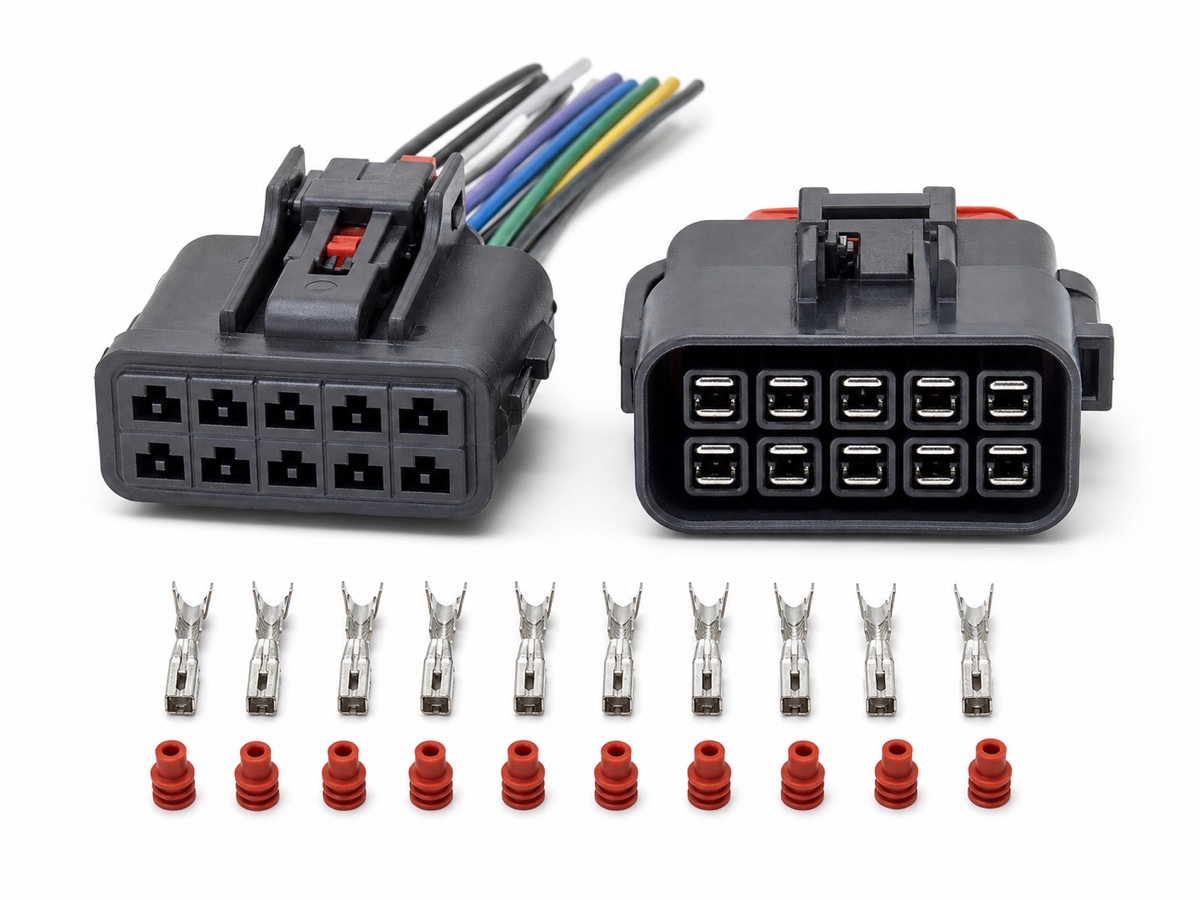
10 Pin Automotive Wire Harness Connector
Wire harness connector
- Pin
- 10 Pin
- Voltage
- 24V
- Current
- 8A
- IP
- IP54
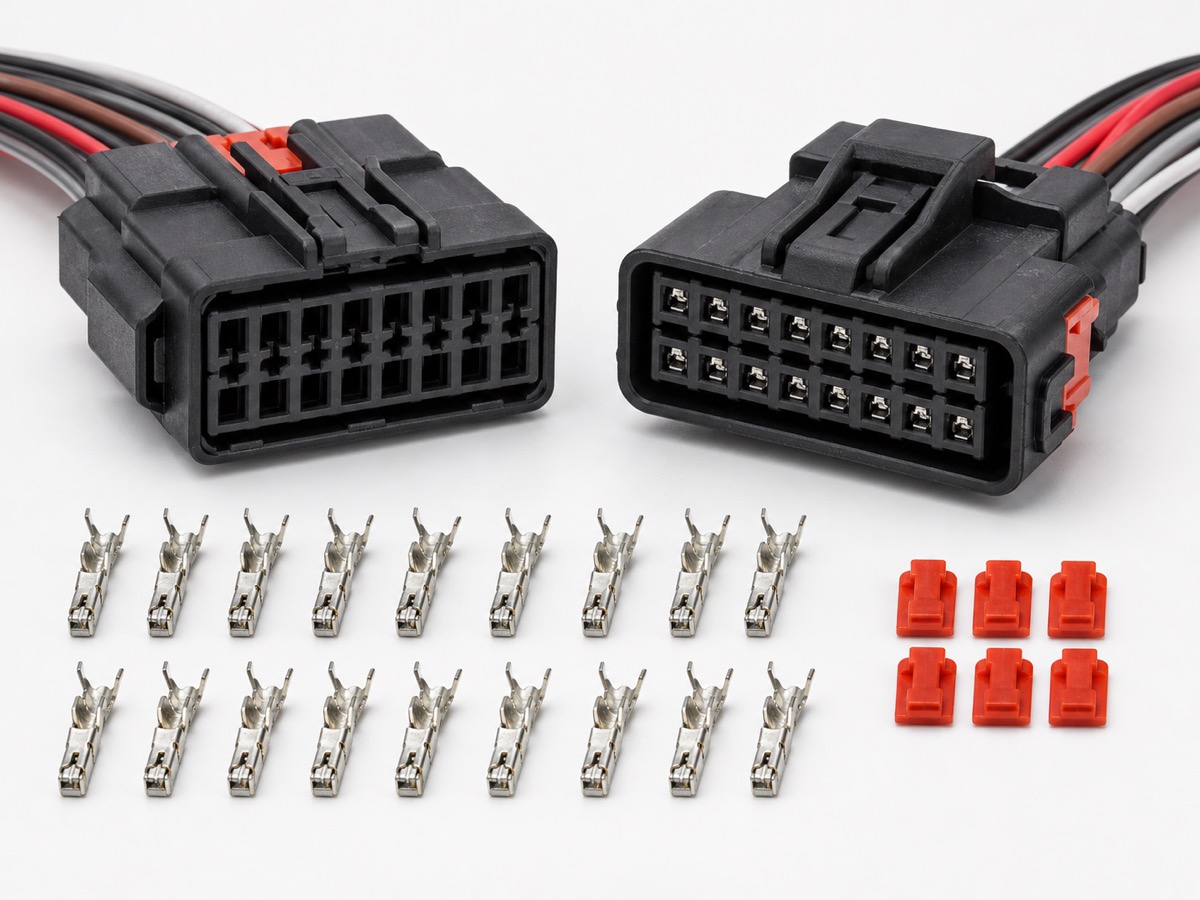
16 Pin Automotive Body Harness Connector
Body harness connector
- Pin
- 16 Pin
- Voltage
- 24V
- Current
- 8A
- IP
- IP54
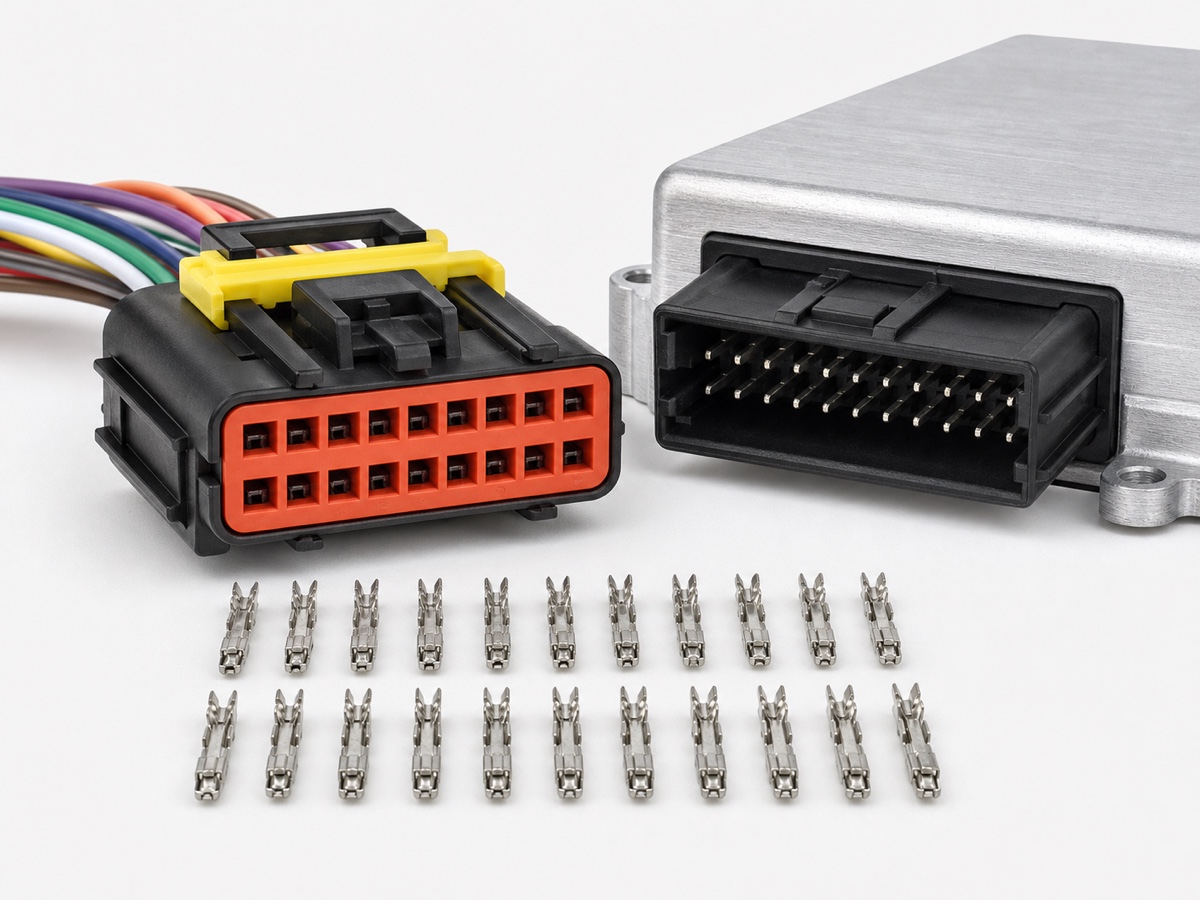
18 Pin Automotive ECU Connector
ECU connector
- Pin
- 18 Pin
- Voltage
- 24V
- Current
- 5A
- IP
- Application dependent
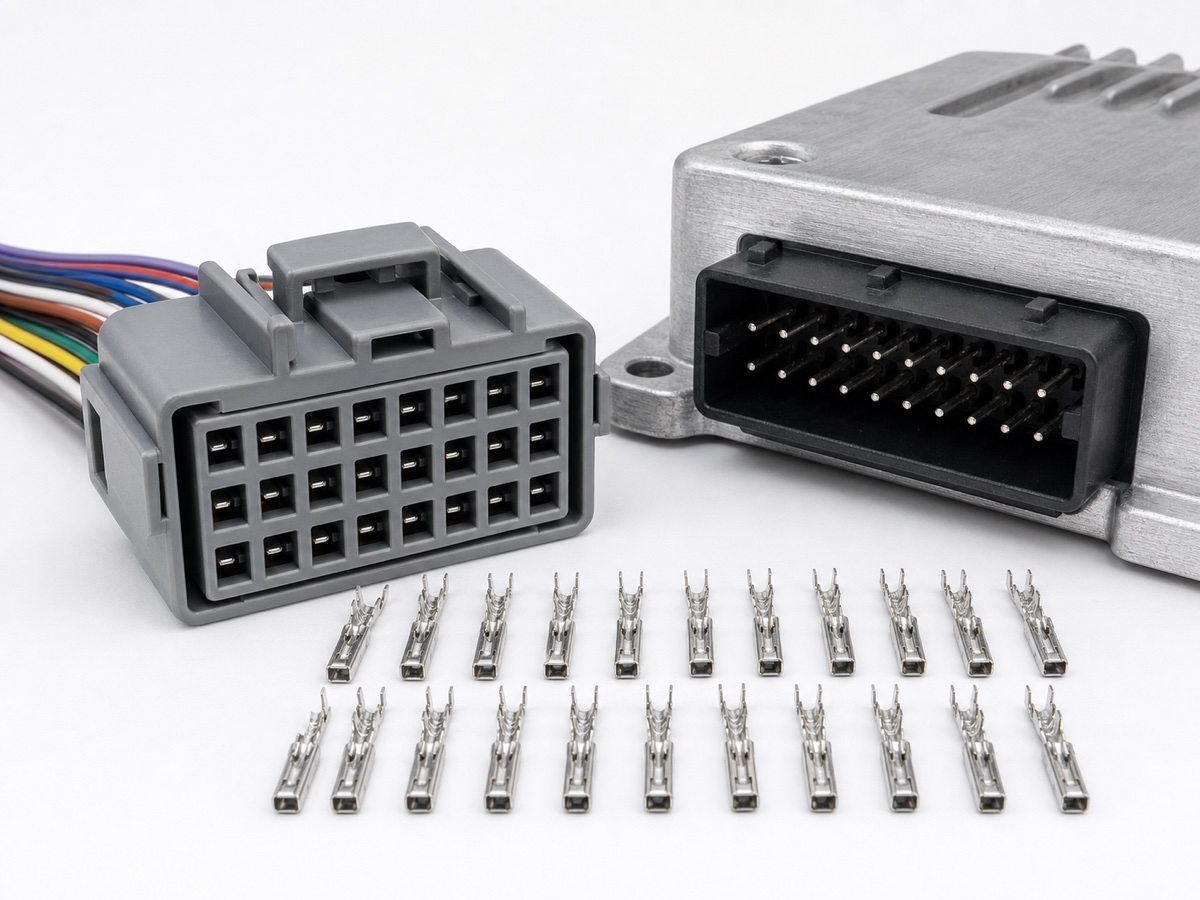
24 Pin Automotive Control Module Connector
Control module connector
- Pin
- 24 Pin
- Voltage
- 24V
- Current
- 5A
- IP
- Application dependent
Manufacturing support
Engineering and production support
Support can be coordinated from requirement review and product matching through samples, tooling discussion, testing requirements and production preparation.
Requirement review
Connector selection
Tooling support
Sample testing
Mass production
Quality inspection
Solution FAQ
What connector is used for automotive door harnesses?
Door harnesses commonly use compact multi-pin wire-to-wire connectors with matched terminals and secure locking structures.
Need this connection solution reviewed?
Send application, drawing, voltage, current, environment and annual demand. We will match product options and engineering requirements.