Buyer takeaway
Clarify the connector requirement
Compare product and solution paths
Prepare RFQ details before quotation
Start with the complete contact system
Plating cannot be selected independently from the base material, contact geometry, normal force, terminal size and mating terminal. Confirm the approved male-and-female contact pair and the controlled supplier specification.
Match electrical and thermal conditions
Current, voltage, contact resistance, temperature rise and ambient temperature influence contact-system selection. Signal circuits, low-voltage power paths and high-current terminals may require different contact designs and plating requirements.
Review environment and motion
Vibration, fretting, humidity, condensation, salt, fluids and temperature cycling can affect interface stability. Define the vehicle location and environmental sequence before approving a plating system from a generic material description.
Control mating compatibility
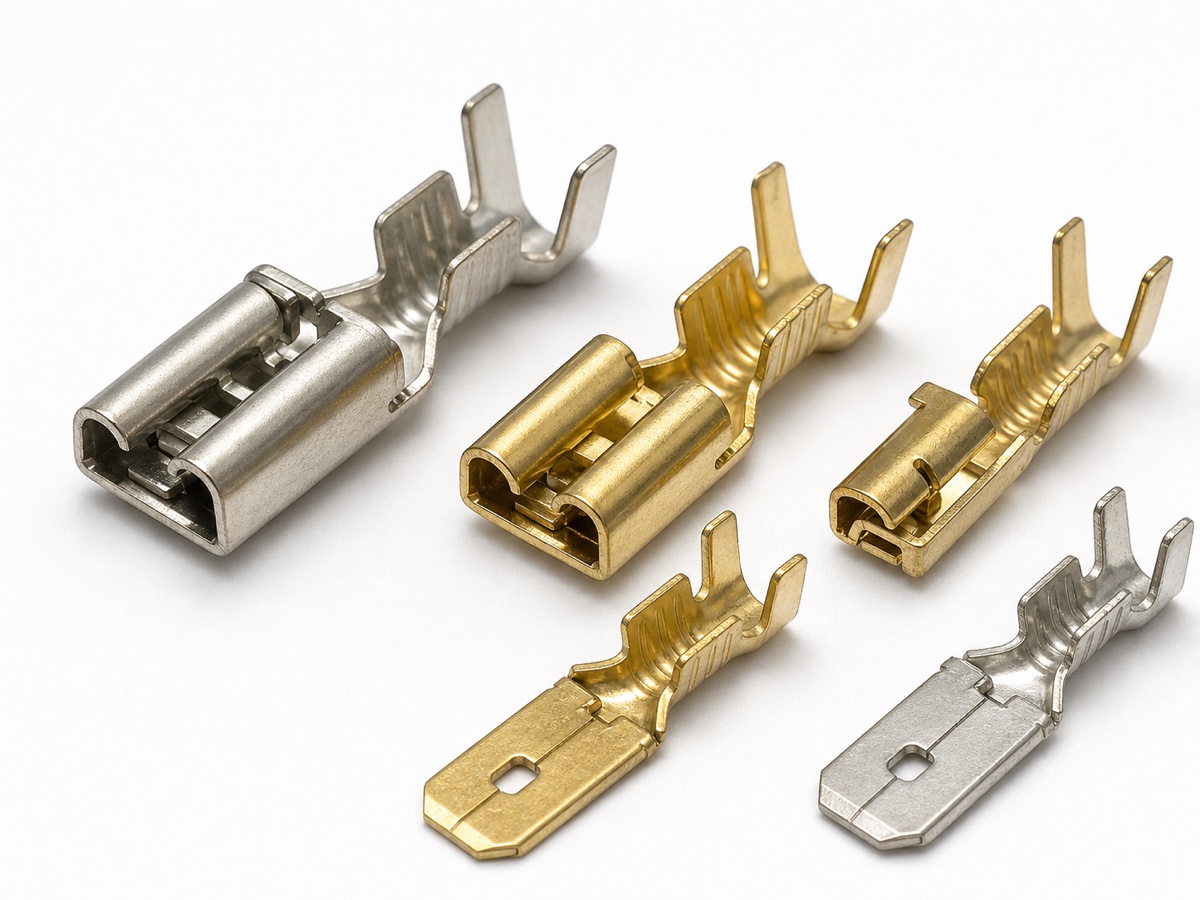
Do not mix terminal finishes or suppliers without engineering review. Mating compatibility includes material, plating, thickness, contact geometry, insertion force and approved validation evidence, not color or appearance alone.
What to request from a supplier
Request the terminal drawing, material and finish specification, compatible mating terminal, wire range, crimp data, application limits and relevant validation records. Record any deviation before sample approval.
FAQ
Common questions
Common procurement and engineering questions related to this topic.
Is gold plating always better than tin plating?
No. Suitability depends on the contact system, circuit, environment, mating compatibility and validated specification. A more expensive finish is not automatically the correct choice.
Can terminals with different plating be mated?
Only when the contact pairing is approved by the responsible engineering specification and supported by compatibility and validation evidence.